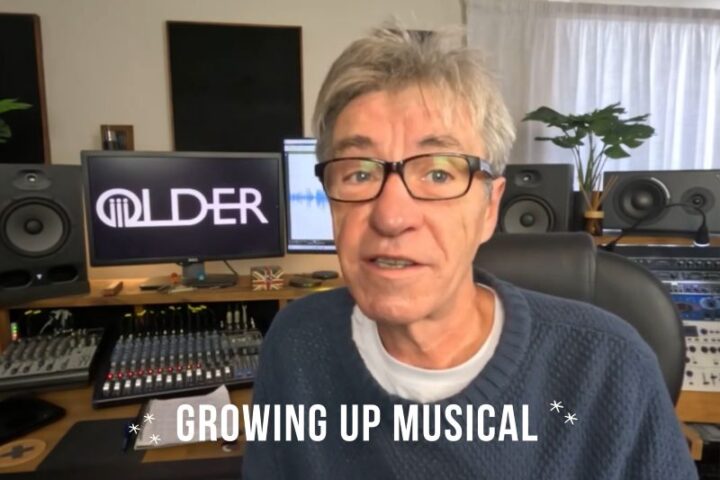
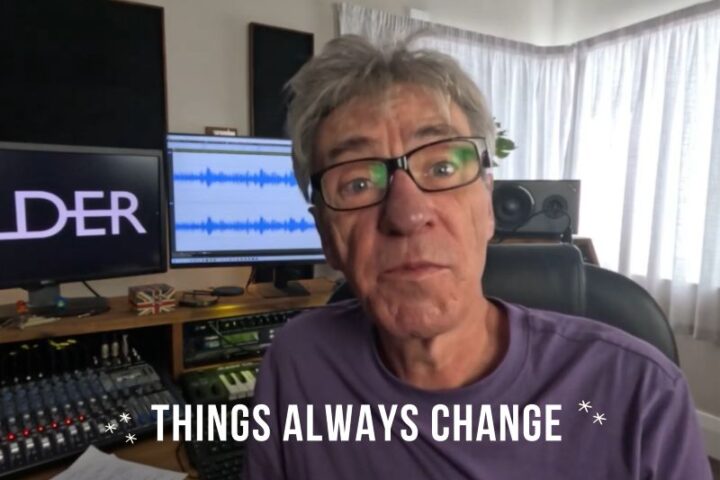
There comes a point in recording vocals where excitement can actually become a bit dangerous. You finish the mix, chuck the headphones on, turn it up loud and think, “Yes. That’s it, brilliant – release it now!” And sometimes it is ready. But more often than not, I’ve learned to sit with it for a while before giving Jel the nod to release it into the wild. Because once a song is released, that vocal is there forever. And trust me, if there’s one tiny thing bothering you, you’ll hear it for the rest of your natural life (lesson learned by experience)!
For me, it’s often not the big things. It’s usually the microscopic details that creep in after repeated listens. A strange inflection on one word, a slightly awkward pronunciation, a harmony that should have been there but wasn’t, or sometimes the opposite. I absolutely love harmonies, which is both a blessing and a curse really. I’ll listen back to one of our OLDER tracks months later and suddenly hear an entirely new harmony line floating above it like some ghost arriving late to the party. And immediately it’s, “Oh no. Why didn’t I think of that at the time?”
I reckon patience matters with vocals. Not endless overworking and not perfectionism to the point where you sand all the life off something, but giving yourself enough distance to properly hear what’s actually there.
Diction plays a huge part in that for me too. I’ve spent more than 25 years doing voice-over work, so pronunciation is deeply wired into my brain. Dotting I’s and crossing T’s, making sure words land properly. But singing is funny because technically “correct” diction isn’t always emotionally correct. Sometimes a lyric sounds far more natural with rougher edges. If you over-polish it, you can accidentally iron all the humanity out of it.
Then there’s the Kiwi accent. I sing in my own voice. I don’t Americanise it. I say “daRnce,” not “dAHnce.” And occasionally when I listen back, even I notice how unusual that can sound compared to the huge amount of American-influenced vocals we hear. But I think you have to get comfortable with your own sound, your own voice. That matters more than trying to sound like somebody else.
I also think time helps you hear the mix differently. When you’re deep in recording, you’re so close to every tiny layer that your ears almost stop being objective. But after a few days you suddenly notice things – you gain some perspective. Maybe a vocal clashing against an instrument, or a harmony rubbing awkwardly against another note. Sometimes it’s a tiny inflection sitting slightly wrong.
Poor Jel has spent many hours with me saying things like, “At exactly 2 minutes 05.53 seconds… something’s off.” And then we hunt for it. Usually it’s one microscopic note. One accidental sharp or flat moment buried inside multiple layers of harmonies and other instruments. Tiny things most people would never consciously notice. But if I notice them, they matter because wrong is wrong!
None of this is because music should be perfect. God knows I’m not trying to be a technically perfect singer. I’ve got a lower voice and I growl sometimes. My voice can crack or wobble when emotion hits a line a certain way, and I actually like some of that. I’m not interested in sterilising every imperfection until it sounds robotic.
But I do think you need to feel comfortable with what you’re putting out into the world. Because if you’re going to live with a song forever, you may as well make sure you can enjoy listening to it too.