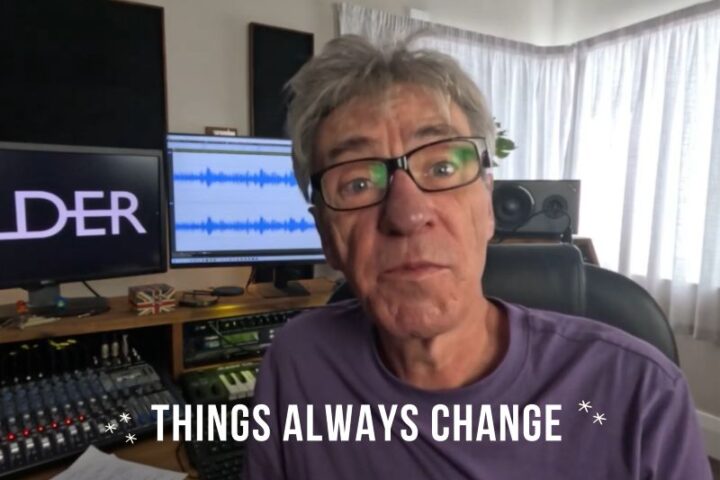
There is a lot of discussion these days about imperfections in music and the importance of the human element. Personally, I think we can sometimes spend far too much time trying to perfect things that don’t actually need perfecting.
When I’m recording and mixing music, particularly with OLDER’s style of energetic alternative rock, I often have to decide where my time is best spent. As a bass player, that can be a difficult decision because bass is important to me. I want it to sound good. But I also know that there comes a point where chasing perfection stops adding value.
If you listen to an isolated bass track, you’ll often hear all sorts of imperfections. Timing isn’t always exact, notes may not be perfectly played and there might be little inconsistencies in the performance. On its own, those things can stand out. Yet once that bass is dropped into the full mix, many of those imperfections simply disappear and even add to the natural vibe.
Because other instruments can mask some imperfections, what matters is not whether every note is flawless, but whether the performance contributes to the overall feeling of the track.
For me, the question is always simple: does it work? Does it create the vibe I want? Does it support the emotion of the song? If the answer is yes, then it’s usually time to move on and focus on something else. That doesn’t mean everything should be left rough. There are areas where I spend more time polishing, and vocals are the best example.
Human beings are naturally tuned in to voices. We notice vocal imperfections far more readily than we notice a slightly uneven bass note or a small timing variation in a rhythm guitar part. If backing vocals start and finish at noticeably different times, it can be distracting. If a lead vocal is wildly out of tune, listeners will hear it immediately.
So while I don’t iron every imperfection out of a vocal performance, I do tend to spend more time refining vocals than I do some other instruments.
The same philosophy applies to guitars. String squeaks, fret noise, slight timing variations between double-tracked guitars and other little artefacts are often worth keeping. Unless they genuinely distract from the listening experience, those sounds help make the performance feel alive.
In many ways, those imperfections are part of what separates music made by musicians from music generated entirely by technology – notably AI. But its not just AI – sample libraries and VST instruments can suffer from too much perfection too – though I acknowledge some allow you to blend in noises. One of my favourites is the sound of foot pedal lifts in pianos!
This is why I think it’s important to know when to stop editing. Perfection isn’t always the goal. If the performance captures the feeling you were aiming for, if it serves the song and if it makes people feel something, then perhaps those little imperfections are exactly what the music needs.