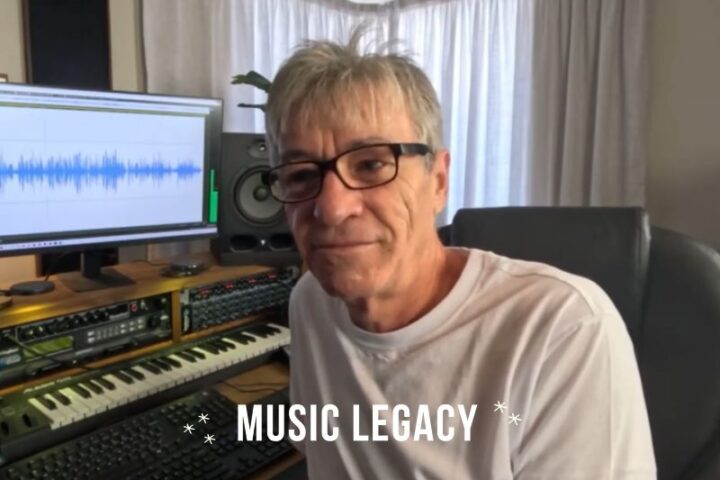
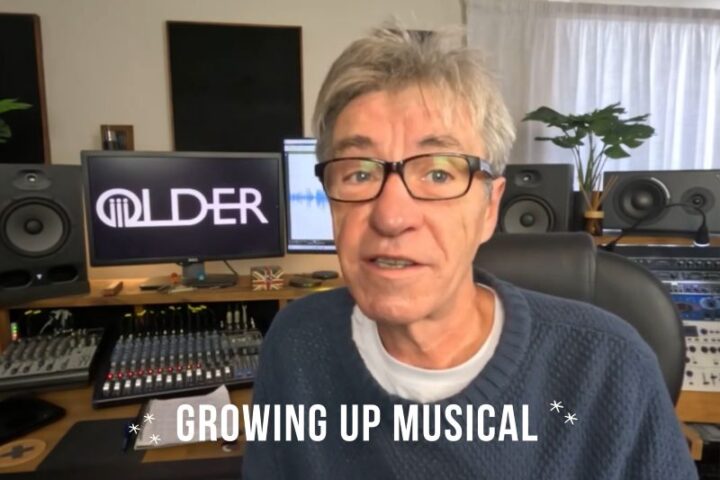
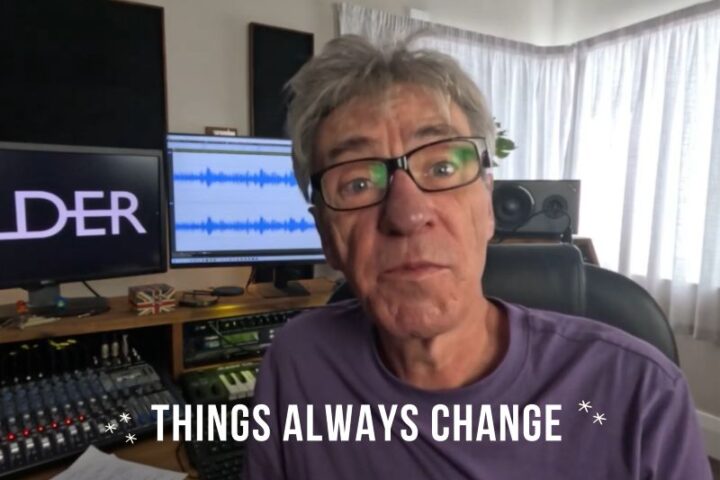
Welcome to Studio 109 – home of OLDER. People often imagine that recording an album requires a huge commercial studio packed with expensive gear. The reality can be quite different. Our studio is simply a spare bedroom that’s evolved over the years into a comfortable place to write, record and produce music. It isn’t glamorous. It isn’t full of the most expensive equipment, but it produces music we’re incredibly proud of.
The vocal booth isn’t anything fancy – its just a dedicated space that works well enough to capture a good performance. We use a Neumann TLM 102 and a Rode NT1.
Our monitoring is equally straightforward. We still have an old pair of Alesis speakers sitting around, but the mixing happens through our Focal Alpha 80 monitors. They’re quality speakers that we trust when making decisions about how a mix will translate to the outside world.
The computer setup is pretty simple too. One Windows 11 machine runs all the recording software (and yes, there are a lot of plugins by Waves, Izotope, UAD etc), while a second computer mostly sits there as a backup … just in case!
The small digital mixing desk isn’t really used as a traditional mixer at all. These days it’s simply an audio interface, connecting microphones, guitars, basses and keyboards to the computer.
Around the room you’ll spot plenty of equipment that’s become more of a museum than a necessity. An old Tascam 24-track recorder reminds us where we came from, while a DBX microphone channel strip still gets regular use. The SansAmp bass preamp remains an important part of recording the Rickenbacker bass, giving it the character we’re after.
There are a few very dated pieces too. An old PreSonus eight-channel analogue compressor now spends most of its life looking interesting, while the headphone distribution amp still quietly gets on with its job whenever someone is recording vocals & Jel is monitoring.
The synth rack has a couple of favourites. The Novation KS Rack still gets used whenever we want those classic analogue-style sounds – its a physical modelling synth. Sitting on the desk is another physical modelling analogue synth – the Waldorf Blofeld — an excellent machine that probably deserves a lot more use than it gets.
The guitars and basses wait patiently in the corner between sessions. There’s a Blackstar amp for the guitar, a spare Dean bass that occasionally gets called into service, and a tiny bass practice amp that almost never gets switched on.
And then there’s arguably the most important piece of equipment in the room. The heater. There’s nothing inspirational about trying to record music with freezing fingers in the middle of a New Zealand winter.
Over the years we’ve learned an important lesson: great music doesn’t come from owning the most expensive gear. It comes from knowing the equipment you already have, learning how to use it well, and spending countless hours developing your ears.
Could we upgrade parts of the studio? Of course. Do we need to? Not really. Studio 109 is proof that a simple bedroom studio can produce professional-sounding music. The gear helps, but it’s only ever been the tool. The creativity, experience and persistence behind it are what really make the difference.